Fiberglass shower wall panels are a practical entry-level choice. They are easy to maintain and take less time to install than tile.
The tradeoff is durability. In a busy primary shower, scratches, flexing, and fading can make the surface look worn sooner.
What Are Fiberglass Shower Wall Panels?
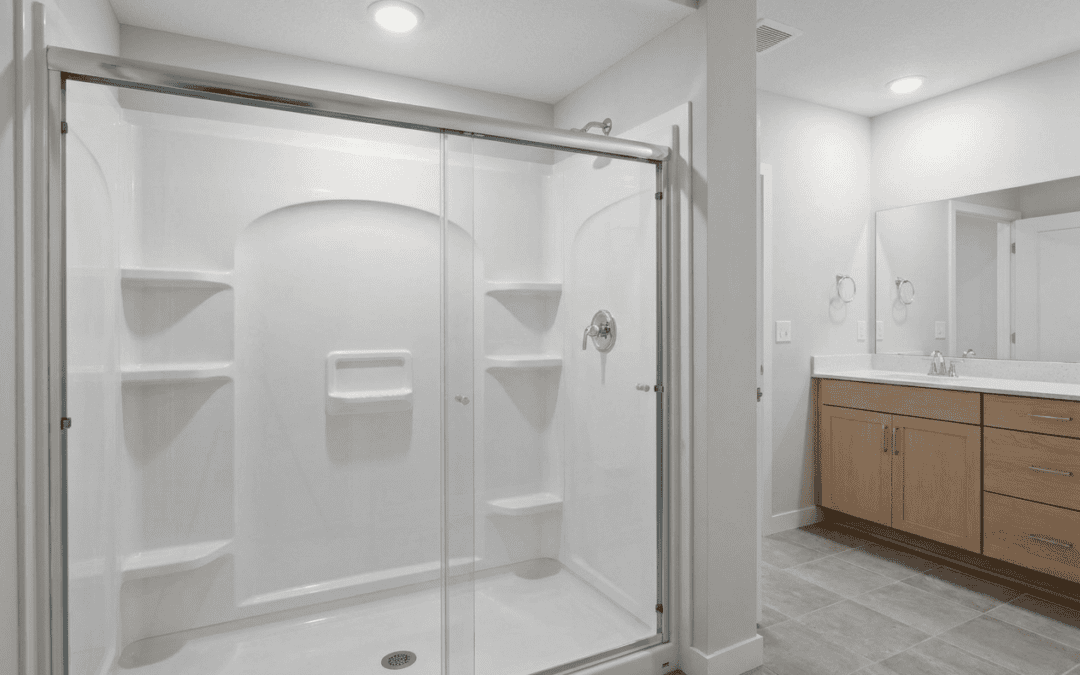
Fiberglass panels are built from resin reinforced with glass fibers and covered with a smooth finish.
The product is common in prefabricated surrounds and alcoves. It offers fewer choices than tile or solid surface.
The Pros of Fiberglass Shower Wall Panels
Fiberglass works best for a functional replacement without a major construction project.
- Lightweight panels are easy for a professional to install.
- The surface has no grout lines to seal.
- Many products fit standard alcoves.
- Cleaning takes mild cleaner and a soft cloth.
For a guest bath, rental, or lightly used shower, those benefits may outweigh the finish limits.
What Are the Drawbacks of Fiberglass Shower Walls?
Thin panels can flex over an uneven wall. Cracks often develop near corners, shelves, fasteners, and plumbing openings.
The finish can scratch, dull, stain, or yellow. Fiberglass is wrong for a high-end primary bathroom.
Appearance Can Wear Out Before the Shower Fails
A fiberglass shower may contain water while looking tired.
Scratches and fading do not always require replacement, but they can make the bathroom feel dated.
Why Proper Installation Matters
Waterproof panels do not automatically create a waterproof shower. Joints remain vulnerable.
The wall must be ready, level, and solid. Seams, corners, fixture openings, caulk joints, and the shower-base connection require careful sealing. The EPA’s guidance on wet-wall construction also emphasizes preventing water from entering wall and floor cavities during bathroom remodeling.
Waterproof Panels Still Have Vulnerable Joints
Movement behind the wall can reopen cracks or separate sealed joints.
Ask how the contractor supports the panels. A surface patch will not correct a wall that was built incorrectly.
Are Fiberglass Shower Walls Easy to Clean?
Yes. Use mild, nonabrasive cleaner with a soft cloth or sponge.
Abrasive pads can damage the finish. Fiberglass is easy to maintain, but it is not maintenance-free.
Can Fiberglass Shower Panels Be Repaired?
Small chips and isolated cracks may be repaired. Matching the original color and sheen is difficult.
Soft spots, recurring cracks, widespread crazing, or leaks usually indicate a larger support problem. Those conditions should not be ignored because the CDC notes that indoor moisture and mold are closely connected, particularly around leaks and other persistently damp materials.
Where Fiberglass Works—and When Another Material May Outperform It
Fiberglass suits secondary bathrooms, rentals, and standard alcoves. It works for homeowners ready for a straightforward replacement.
For a primary shower, acrylic, solid surface, or high-tech polymer walls may outperform fiberglass in durability and finish retention. Compare the broader shower material options before choosing.