
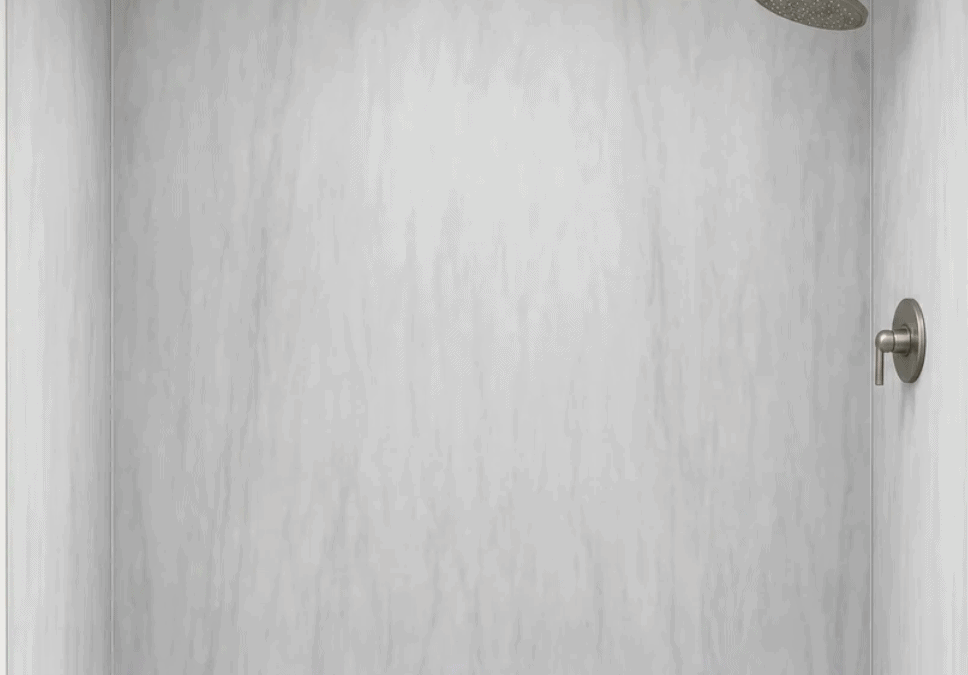
Samuel Mueller shower walls give homeowners a grout-free beautiful alternative to traditional tile, with multiple constructions, colors, textures, and patterns available across the brand’s collections. Depending on the model, a Samuel Mueller shower wall may use compression-molded solid surface, mineral resin, or another composite construction.
That variety makes it important to compare the actual model rather than the brand name alone. Homeowners planning a shower replacement should consider panel construction, seams, cleaning, repairability, and installation before deciding what fits their bathroom.
What Are Samuel Mueller Shower Wall Panels?
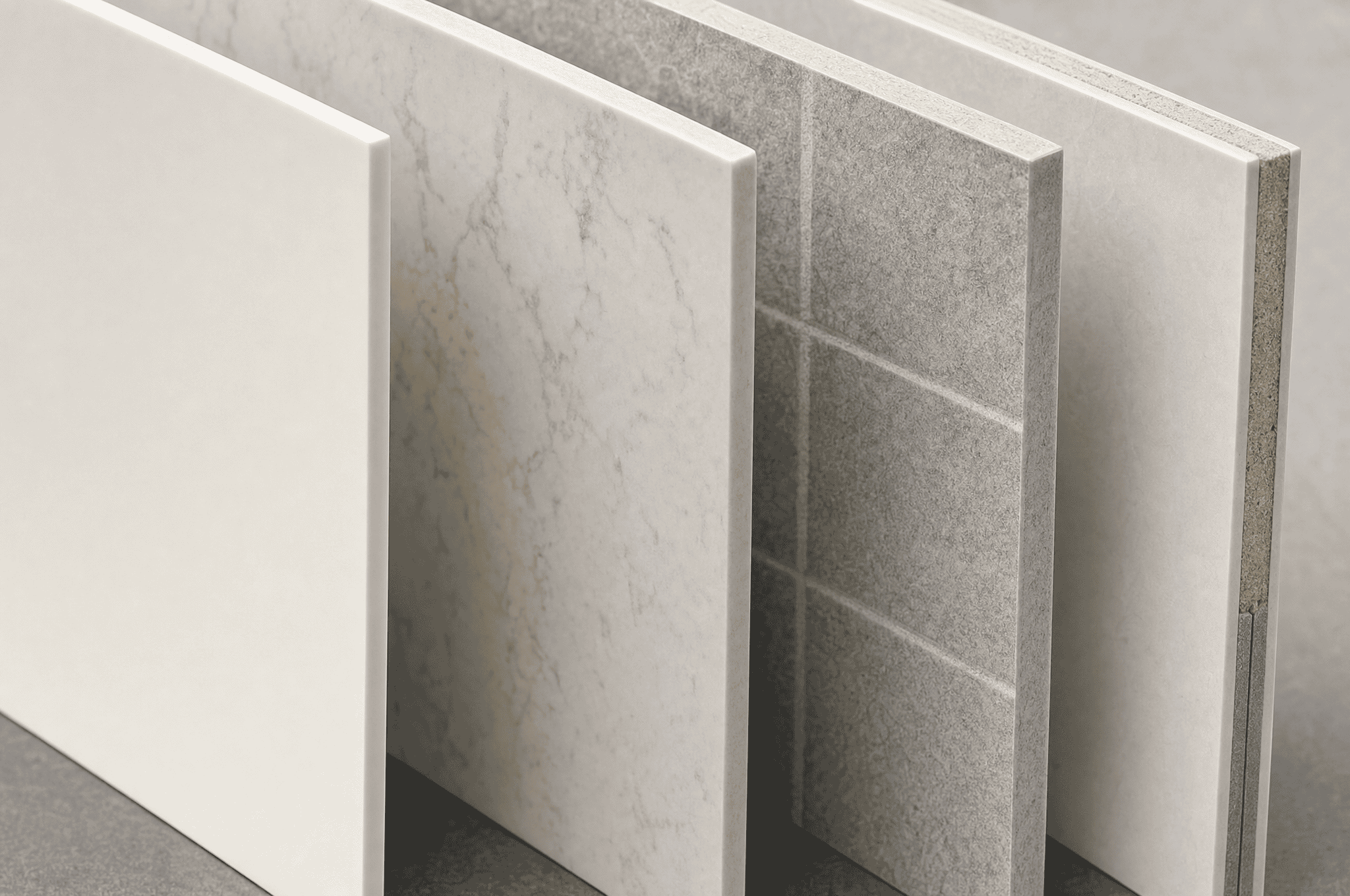
Samuel Mueller offers several types of wall panels rather than one standard material. Monterey models, for example, include compression-molded solid surface options, while other panels use thinner composite or layered construction. Some panels are approximately 0.14 inches thick, while certain Monterey solid surface models are about 1/4 inch thick.
The shower walls are designed to mimic tile and stone without traditional grout lines. Surfaces are available in multiple colors, textures, and patterns, including realistic subway-tile looks and smoother finishes that can complement different bathroom styles. The Monterey collection alone includes colors such as Carrara, Grey Stone, Moonstone, Creme, and Butternut with tile or Velvet surface options.
Many panels can also be cut or trimmed to fit different shower sizes. The Silhouette and other collections add more design choices, so homeowners should check the construction and specifications for the exact shower wall panel they are considering.
Pros and Cons of Samuel Mueller Shower Walls
A major advantage is lower grout maintenance. Large wall panels can create a tile- or stone-inspired appearance without the many grout joints found in a traditional tile shower. Non-porous solid surface materials also resist moisture absorption and do not readily support bacteria, mold, or mildew growth on the wall surface itself.
Solid surface can also provide good scratch and impact resistance, and some color-through materials are renewable when minor surface damage occurs. Composite and solid surface panels may provide greater rigidity and long-term durability than basic thin acrylic systems, although construction and installation quality still matter.
There are tradeoffs. Multi-panel systems still create seams at corners and between wall sections, and those joints must remain properly sealed. Improper installation, poor wall preparation, or failed silicone can lead to moisture problems in any shower system.
Repairability also depends on the model. Light surface damage may be repairable on certain solid surface panels, but deep cracks or damage through a decorative layer may require replacement of the affected panel.
Cleaning, Installation, and Warranty
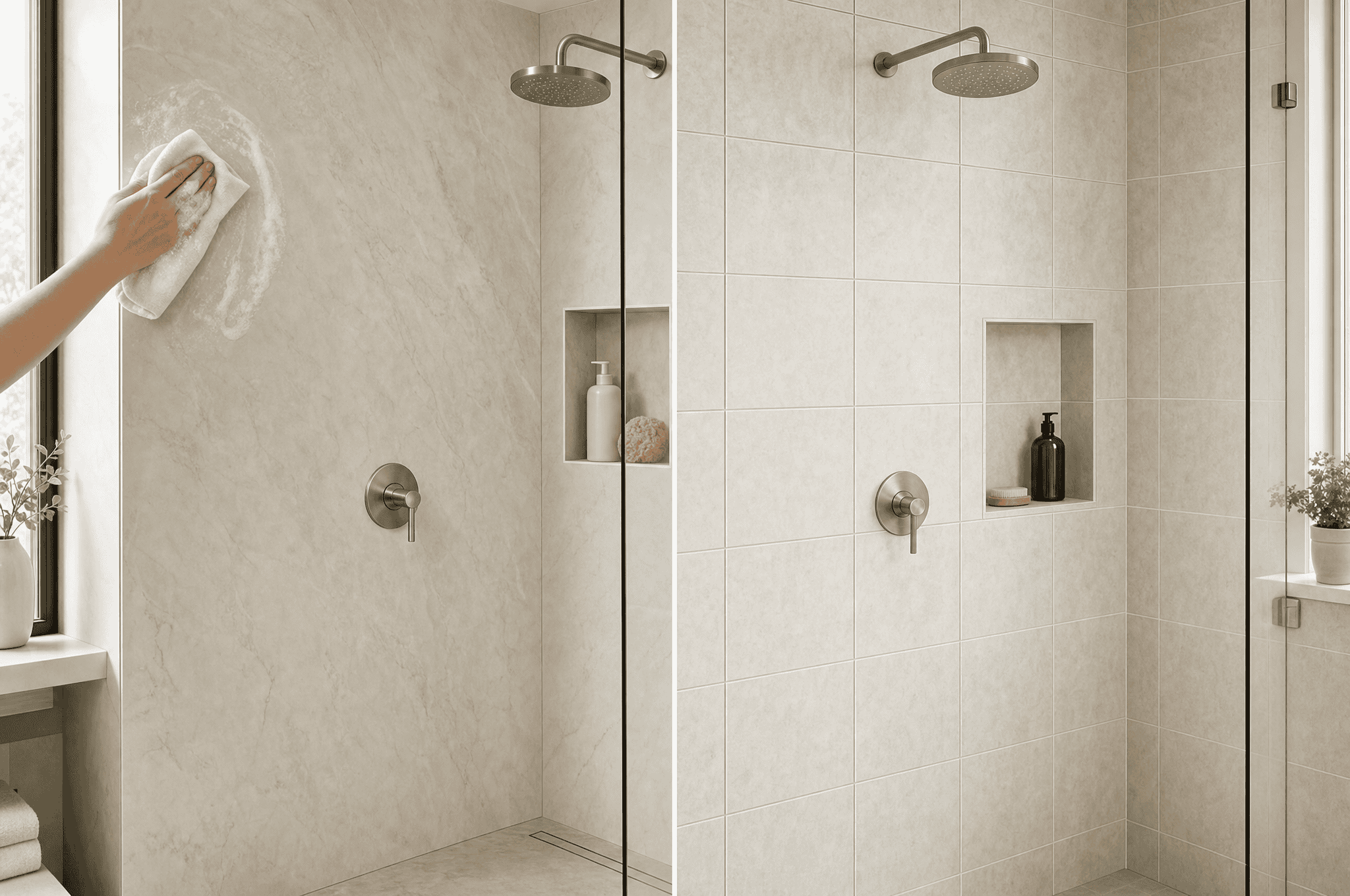
Routine maintenance is generally straightforward. Homeowners should use gentle, non-abrasive cleaning methods unless the instructions for a specific model say otherwise, since surface care can vary between solid surface, textured, and layered wall panels.
Samuel Mueller panels are installed in large sheets, which can reduce installation time compared with traditional tile. Tile requires waterproofing preparation, placement of individual pieces, grout, and several finishing steps, while large panels cover more wall area at once. Panels still need a stable, dry surface and correctly sealed seams for long-term performance.
Warranty coverage is another detail to check by model. Many Samuel Mueller bath products, including listed solid surface and SMC shower/tub walls, currently carry a 10-year limited residential warranty, with different terms for commercial use. Homeowners can review the manufacturer’s warranty information and should confirm the warranty for the exact model being installed.
For an example of how construction, finish, thickness, and warranty can vary, the manufacturer’s Monterey panel specifications describe a 4 mm compression-molded solid surface shower wall panel with a tile pattern, renewable color-through surface, and 10-year limited residential warranty.
How Do Samuel Mueller Shower Walls Compare?
Compared with Onyx shower walls, Samuel Mueller offers a broader mix of wall constructions rather than one directly comparable composite formula. Both can reduce grout lines and provide large-format panels, but material thickness, seam layout, surface type, and repair options vary.
Traditional tile still provides greater freedom for intricate patterns and custom layouts, while panel systems can offer easier cleaning and fewer installation steps. Acrylic can also provide a grout-free shower wall; some acrylic panel systems are around 1/4 inch thick, but thickness alone does not determine quality or durability.
The broader shower material guide can help homeowners compare Samuel Mueller with acrylic, fiberglass, Onyx, solid surface, tile, and other shower wall options. The best fit depends on the specific model, appearance, number of seams, maintenance needs, repairability, cost, and installation requirements rather than assuming one material is right for every home.