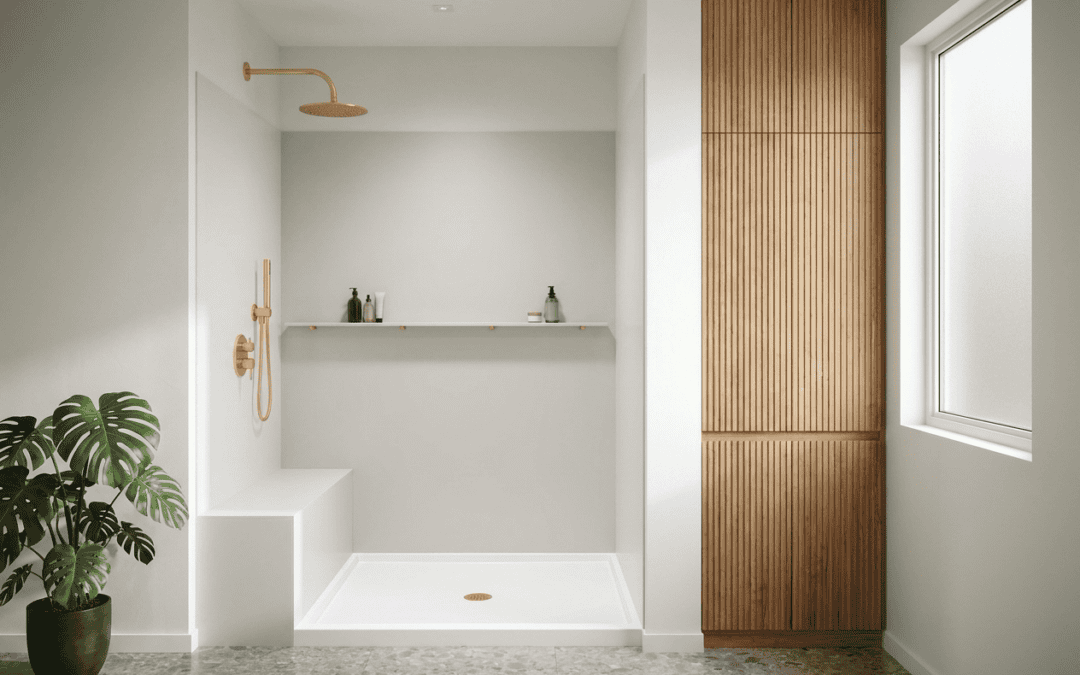
Swanstone shower walls suit homeowners who want fewer grout joints without a light, flexible surround. The solid surface runs through the panel, so minor scratches are less alarming than on a coated finish. Swanstone is heavy, less customizable than tile, and easier to install well with experienced hands.
What Are Swanstone Shower Walls?
Swan describes Swanstone as a compression-molded solid surface made from polymer resins, fillers, and reinforcement under heat and pressure. The result is a dense thermoset panel. Because the material and color run through the panel, ordinary wear behaves differently than it does on a coated product.
How Swanstone Solid Surface Differs From Coated Shower Wall Systems
Chip a coated shower wall deeply enough and you can expose a different substrate. Swanstone does not rely on a thin decorative face. Its through-body construction makes minor surface repair more realistic. The panel is heavier than many acrylic wall panels and offers less visual variety than tile or natural stone, but that solid construction is a practical strength.
Swanstone Shower Walls: Pros and Cons
The best reason to choose Swanstone is not the brand name. It solves three annoyances that show up again and again in shower remodeling: too much grout to maintain, surfaces that cannot be repaired once the finish is damaged, and wall systems that feel thin or flexible.
That does not make it the automatic winner. If you want intricate tilework or the cheapest possible surround, Swanstone is usually the wrong call. If you want a solid shower wall that is easier to live with every day, the tradeoffs are much easier to justify. In practice, its value shows up after installation, when cleaning and minor surface wear become routine ownership issues rather than remodel-day concerns.
Pros: Easy to Clean, Fewer Grout Lines, Repairable Solid Surface
- There is much less grout to maintain. Large wall panels remove most of the grout lines found in a traditional tile shower. You still have sealed joints at corners and transitions, but you are not scrubbing dozens of cement-based grout lines every time the shower starts to look tired.
- The nonporous surface is easier to keep clean. Soap film still happens; no shower is maintenance-free. But smooth walls do not absorb water the way cementitious grout can, and there are fewer places for mold and mildew to get established. For homeowners who are tired of grout maintenance, this is the strongest everyday benefit.
- Minor surface damage is often repairable. Because the color runs through the solid surface, a light scratch does not automatically expose a different-looking layer underneath. Some marks can be buffed, sanded, or polished back into the surrounding material. That is a real service-life and durability advantage over wall systems where the decorative finish is only skin deep.
- The panels feel substantial. Swanstone has more mass than many basic acrylic or fiberglass surrounds. If you dislike a hollow-feeling shower wall, you will probably prefer this construction.
None of those advantages cancels out poor workmanship. A durable panel with a bad corner joint is still a bad shower.
Cons: Weight, Cost, and Design Limits
- The panels are heavy. A large panel has to get through the house, through the bathroom door, and into position without being damaged. That can turn a seemingly simple remodeling job into a two-person handling problem.
- The design range is limited compared with tile or natural stone. Swan offers smooth walls, colors, and subway tile looks, but tile gives you far more control over pattern, borders, mosaics, grout color, and unusual layouts. If custom aesthetics drive the project, use tile.
- Swanstone is not usually the low-cost option. It can cost more than entry-level surrounds, and installation still requires wall preparation, accurate fitting, adhesive work, and sealed joints. Buying a premium panel and then cutting corners on labor defeats the point.
- Fewer seams does not mean no seams. Corners, panel transitions, and the shower base still need properly installed joints and caulk. Marketing language sometimes makes panel systems sound seamless; the water does not care about marketing.
For most homeowners, the practical decision is simple: choose Swanstone for lower maintenance and a more substantial solid-surface feel, not because you expect unlimited design freedom or bargain installation.
How Do You Clean and Repair Swanstone Shower Walls?
Routine maintenance is simple: use compatible household cleaners, rinse the walls, and keep the joints clean. Wall material alone does not prevent bathroom mold; EPA moisture-control guidance recommends controlling moisture, improving ventilation, and cleaning more frequently when bathroom mold keeps returning.
Everyday Cleaning and Household Cleaner Compatibility
Swanstone is easy to clean mainly because there is less grout. Follow current care instructions instead of assuming every strong cleaner is compatible.
Can Scratches in Swanstone Be Repaired?
Minor scratches can often be buffed, sanded, or polished because the solid surface continues through the panel. Deep gouges or cracks need a different repair.
Swanstone Shower Wall Installation: Panels, Seams, and Fit
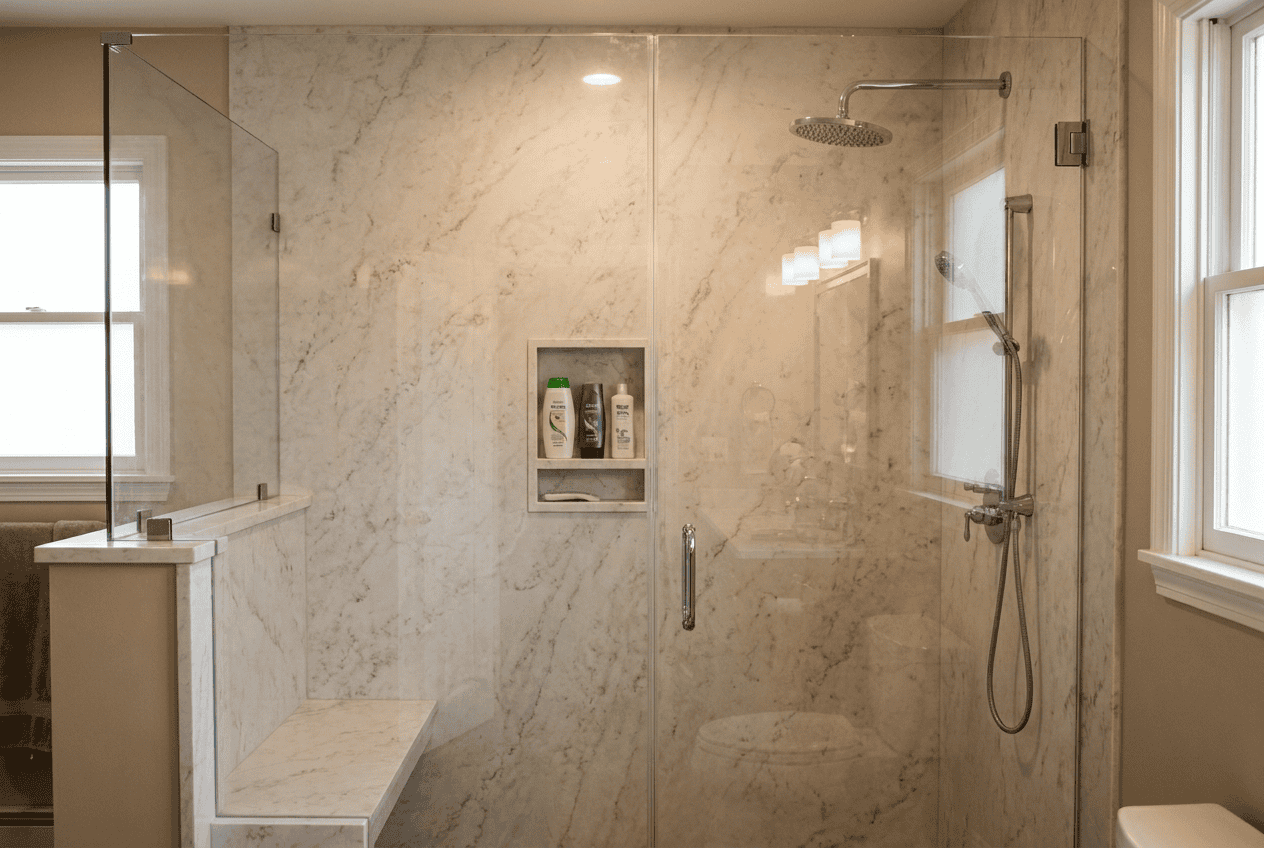
Panels can be trimmed to fit and may go over a properly prepared existing surface. Flat walls, accurate measurements, compatible adhesive, and careful sealing still matter. Substrate prep affects how the panels glue and how tightly they fit.
Panel Sizes, Weight, and X 96 Walls
A 36 x 96 or 62 x 96 panel is large enough that doorway clearance, panel size, and maneuvering space matter. Swan’s current 36 x 96 single-panel specifications list a 1/4-inch thickness and substantial panel weight, which is why handling space deserves attention before installation begins.
Minimal Seams Still Need Proper Joints
Minimal seams help, but the shower is not literally seamless. Corners and the shower-base connection still need sealed joints.
Swan Shower Walls for Bathroom Design: Smooth Walls and Subway Tile
Swan shower walls include smooth walls and subway tile looks such as Metro Subway. Colors such as Ash Gray, Mountain Mist, Coastal Sands, and Tahiti White add variety without trying to imitate the endless options of natural stone or tile. For bathroom design, Swan favors clean functionality over custom pattern work.
When Is a Swanstone Shower the Right Choice?
Choose a Swanstone shower when you prefer easier maintenance, fewer joints, a substantial solid surface, and repairability. If cost or custom design comes first, compare shower replacement material options by maintenance, construction, repairability, and fit rather than judging the showroom sample alone.
The PuroStone wall system is another option when a warm, matte engineered-composite surface and simpler upkeep fit the bathroom better. LuxStone is also worth comparing when its proprietary patterns, seams, accessories, cleaning requirements, and installer support align more closely with the project.