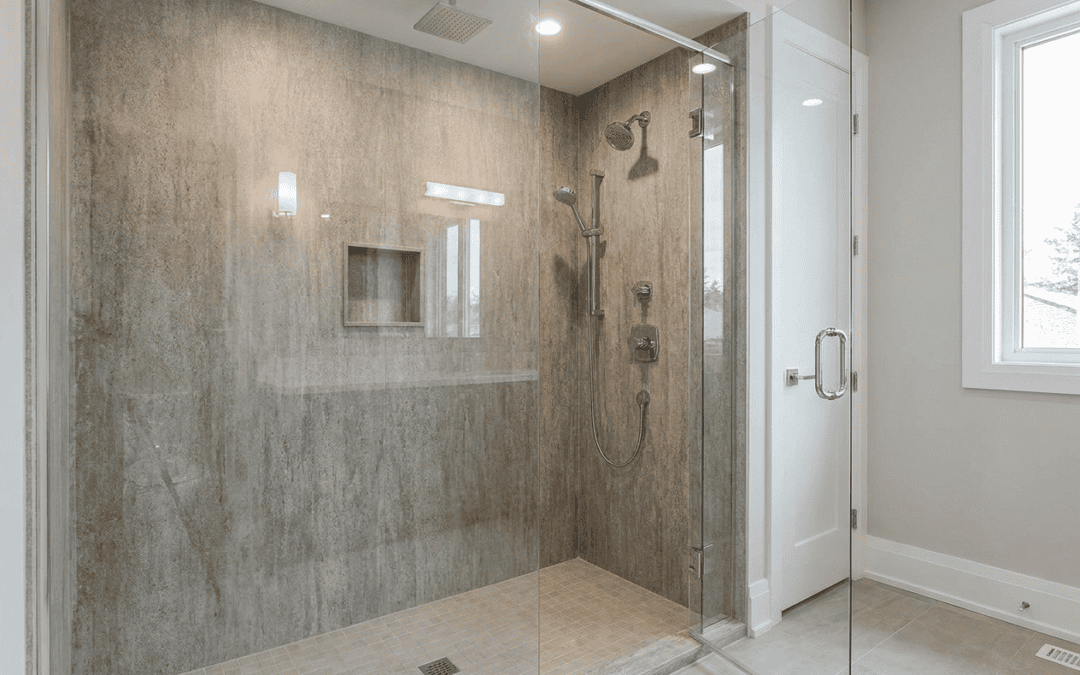
High-tech polymer shower walls are manufactured wall panels used to create a durable, non-porous shower surround without the grout maintenance of traditional tile. Some products have an acrylic face. Others combine polymer layers with reinforcement, structural backing, or a composite core.
That distinction matters. High-tech polymer is a broad product category, not one construction standard. Two shower panels can look alike in a showroom and perform very differently after installation.
For homeowners, the decision comes down to panel quality, the condition of the walls behind it, and the installer’s ability to fit and seal the system correctly. A strong product installed over damaged or uneven walls is still a bad shower.
What Are High-Tech Polymer Shower Walls?
High-tech polymer shower walls are large, manufactured panels fitted around an acrylic shower or walk in shower. Instead of setting hundreds of individual pieces, the installer covers the wet-area walls with a small number of panels.
The surface may be smooth, textured, glossy, matte, or printed with tile and stone patterns. These systems are common in replacement showers because they create a modern bathroom with less wall labor than tile showers.
Polymer covers a wide range of materials. Acrylic is a polymer, but an acrylic wall is not identical to every reinforced polymer panel or composite unit. Surface layers, thickness, backing, and manufacturing methods affect rigidity, durability, and repair options.
Do not buy the phrase “high tech polymer” by itself. Ask what the walls are made from, how the panels are supported, and what the warranty covers.
Is High-Tech Polymer the Same as Acrylic?
Not exactly.
Acrylic shower wall panels often have an acrylic face, but the complete panel may contain fiberglass reinforcement, structural backing, or another composite. Other manufacturers use different polymer formulas.
A contractor should explain the product rather than repeat its name. Ask about thickness, backing, cleaners, fading, repairs, and panel replacement.
How polymer panels differ from basic fiberglass
Basic fiberglass surrounds are lightweight and functional, but many are thin enough to flex when pressed. Their pattern and texture range is usually limited.
A better polymer system often feels more rigid and offers more convincing edge details, matte finishes, and stone patterns. Even so, polymer is not automatically superior. A thin acrylic panel over uneven walls can perform worse than a well-supported fiberglass unit.
How Acrylic Shower Wall Panels Are Made and Installed
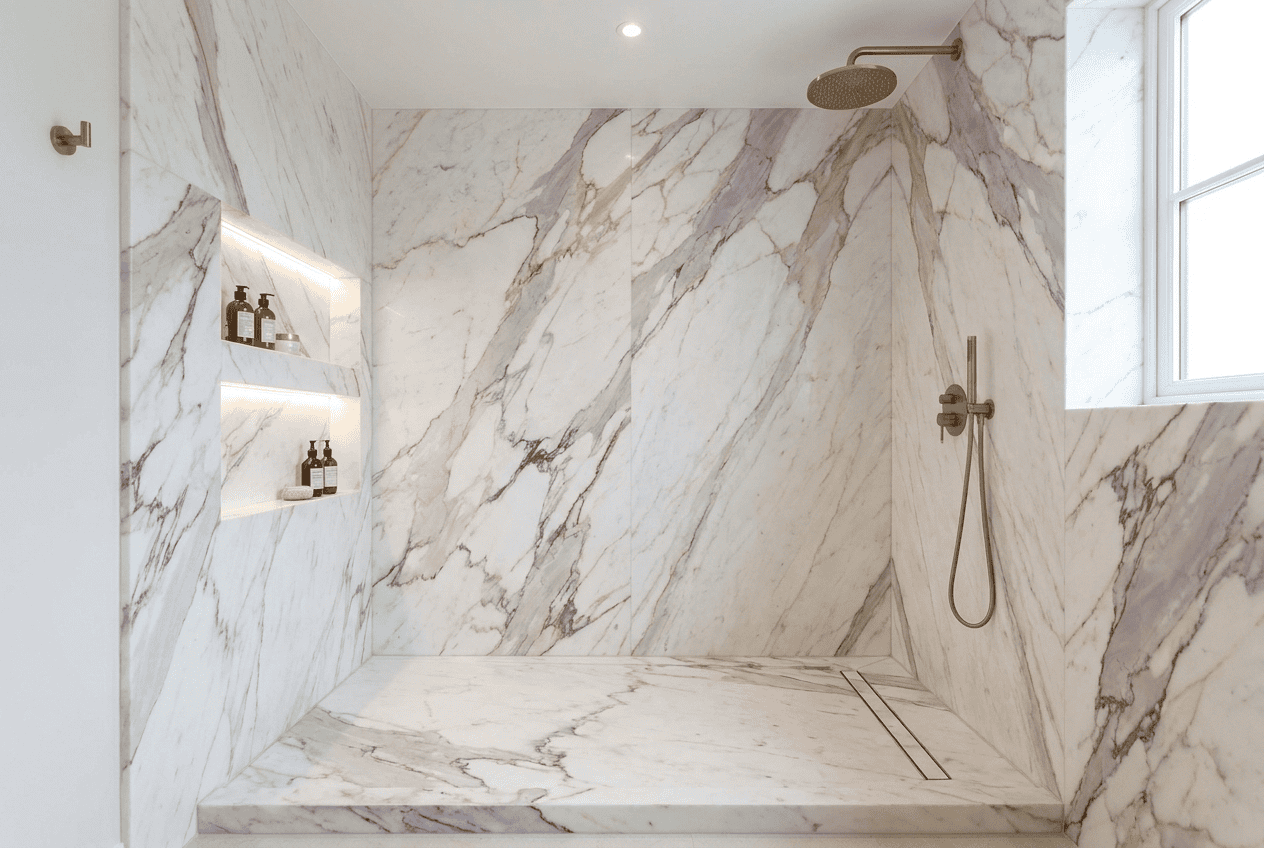
Acrylic shower wall panels are manufactured as large sheets or molded sections. The visible acrylic surface supplies the color, texture, pattern, and water-resistant finish. Reinforcement or backing helps the panels remain flat against the walls.
Installation starts before adhesive is applied. The contractor removes the old surround, inspects the framing and substrate, corrects damaged areas, confirms the base position, and measures the space.
Panels are templated around corners, plumbing, niches, windows, and accessories, then dry-fitted. Rushing produces crooked patterns, oversized holes, uneven trim, and heavy sealant joints.
Large panels reduce joints but do not eliminate them. Inside corners, panel connections, fixture penetrations, and transitions at acrylic shower pans still have to be fitted and sealed.
Why Backing and Wall Preparation Matter
Panels need flat, stable, dry walls. They should not be installed over loose material, hidden mold, damaged drywall, rotted framing, or active water intrusion.
The EPA’s mold and moisture guidance emphasizes that controlling moisture and correcting the water problem are essential parts of addressing mold. Covering a damp or contaminated wall with new shower materials does not solve the underlying issue.
A bowed wall can leave hollow areas behind a panel. Those unsupported spaces allow movement around seams, fixtures, grab bars, and trim. Over time, movement can contribute to cracks or failed sealant.
Covering damage because the new walls will hide it is the wrong call. Polymer panels are a finish system, not a structural repair.
Benefits of High-Tech Polymer Shower Walls
The leading benefit is simpler maintenance. For homeowners tired of scrubbing grout lines, high-tech polymer shower walls are a practical, low maintenance upgrade.
The non porous surface does not absorb water like cement-based grout. Soap residue and mineral deposits still collect, but routine cleaning is usually easier.
Large wall panels also require fewer individual setting, spacing, grouting, and curing steps than tile. That can reduce labor costs and shorten the disruption caused by straightforward replacement showers.
Some simple showers may be installed in one day after preparation. That does not make every bathroom remodel a one day project; repairs, plumbing, glass, curing, and inspections can extend the schedule.
Low-Maintenance Walls Without Traditional Grout Lines
Panel systems eliminate most traditional grout lines, not every joint. Corners, seams, fixture openings, and base transitions still need inspection.
Use soft cloths and manufacturer-approved non abrasive cleaners. Rough scrub pads and harsh powders may leave scratches or dull an acrylic surface.
Low maintenance is accurate. Maintenance-free is not.
Faster Than Most Tile Showers
Tile showers require waterproofing, tile placement, cutting, spacing, grout work, and curing. Polymer panels cover the same walls with fewer operations.
That makes them an affordable alternative when schedule and labor costs matter. The advantage disappears when an installer skips preparation to save time or money.
Drawbacks Homeowners Should Consider
Polymer walls are durable materials for normal use, but they are not indestructible. Abrasive pads can dull the finish, dark gloss surfaces may show water spots, and a hard impact can create chips or cracks.
Printed patterns can also repeat across a large wall. Before selecting a high end stone look, view a full panel or completed shower rather than a small sample.
Durability depends on the panel and its support. Quality panels do not normally break or snap during ordinary use. Damage is more often tied to impact, poor cutting, wall movement, weak backing, or the wrong cleaner.
Scratches, Fading, and Cleaner Restrictions
Acrylic is not a surface to attack with powdered cleanser and a rough pad. That treatment can turn a sleek finish cloudy.
Matte finishes often disguise small marks better than dark gloss. Deep textures may hide wear, but they create more surface detail to clean.
Fading varies by product and exposure. Ask manufacturers or installers how the selected product has performed in completed local showers.
Can Damaged Panels Be Repaired?
Minor scratches, chips, or shallow cracks may sometimes be filled or refinished. Solid colors are generally easier to match than printed acrylic panels.
A crack caused by movement cannot be corrected by filling the surface alone. The unsupported area or installation fault must be addressed first.
Severe damage may require the contractor to replace a panel. That can be disruptive when the piece is locked behind trim, glass, or adjoining walls.
Why Seams and Wall Preparation Matter
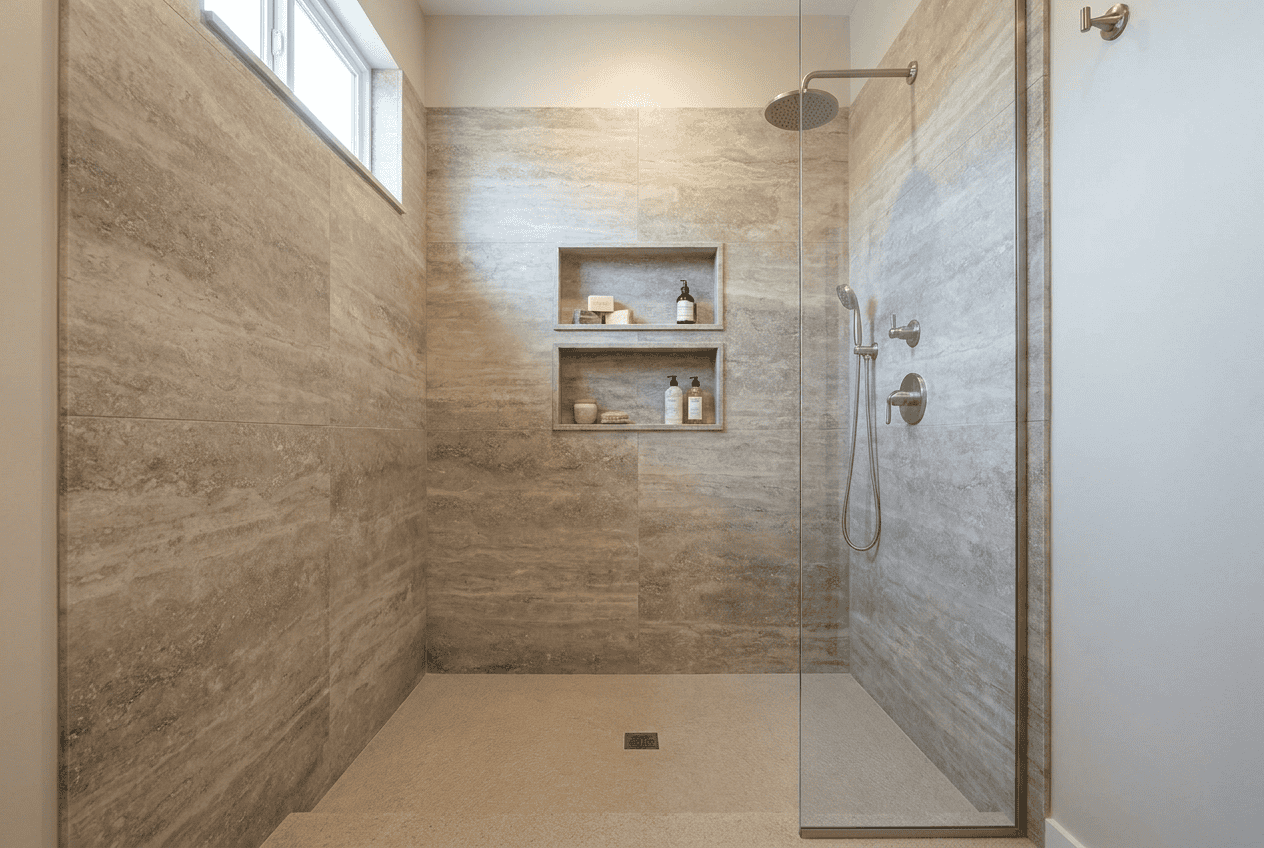
A homeowner is shown a “seamless shower,” then the finished unit has vertical joints in the corners and a connection near the shower pan. That does not always mean the installation failed. It often means the word seamless was used too loosely.
Most polymer showers use several panels. Seams appear where walls meet, where two panels connect, around niches, beside windows, near trim, and at plumbing penetrations. Fewer seams than tile is a real benefit. No seams at all usually is not.
The seam layout should be planned before cutting begins. A good installer considers wall dimensions, panel size, pattern direction, fixtures, accessories, and where the eye lands when someone enters the bathroom.
Poor planning can split a stone pattern through its most visible section. A well-planned joint lands in a corner, follows a pattern, or disappears into trim.
Wall preparation controls how clean those joints can be. When walls bow, lean, or change direction, the panels expose the problem. The installer may need wider sealant joints or irregular trim to close gaps.
That is why flat walls matter more than homeowners expect. Polymer panels are not flexible wallpaper. They need reliable contact with the substrate.
Common seam locations include inside corners, long walls, shower-pan transitions, recessed niches, window openings, and vertical trim. Decorative grout lines molded or printed into the finish are not structural seams; actual joints must still be fitted and sealed.
Shower size changes the layout. A compact alcove may use three wall panels with only corner joints. A larger walk in shower may need more panels and therefore more visible connections.
Accessories complicate the plan. Grab bars, seats, shelves, valves, and handheld mounts should be located before panels are ordered. Grab bars also need secure blocking behind the finished walls; adhesive and a thin panel do not provide that security.
Properly installed seams are straight, narrow, fully sealed, and visually consistent. Patterns should align where the product is designed to align.
Open gaps, loose trim, oversized sealant beads, irregular corners, or panels that move when pressed point to poor fitting or weak support. Sealant is part of the water-management system, not a substitute for an accurate cut.
A post installation inspection should cover every corner, penetration, trim edge, and base transition. Homeowners should also ask who handles future seam maintenance and what the installation warranty covers.
Pattern alignment deserves the same attention as sealing. On marble-look walls, a sudden change in vein direction can make a sound installation look careless. Contractors should lay out the panels before cutting, confirm which edges are factory-finished, and show the homeowner where unavoidable joints will land. This planning does not remove seams, but it keeps them from becoming the first thing visible from the bathroom door.
The long term value of the shower depends more on these details than on a brochure. A stylish panel cannot rescue poor substrate preparation.
Which Finish Is Easiest to Live With?
Gloss panels reflect light and can make a small bathroom feel brighter. They also show hard-water spots, soap residue, and fine scratches more clearly.
Matte finishes soften reflections and disguise minor wear. For a busy household, matte is usually the safer choice.
Textured walls create depth and can make faux stone look more substantial. Light textures add style without the cleaning burden of heavily embossed patterns.
Faux Tile and Stone Patterns
Modern printing can transform manufactured panels into convincing tile or stone looks. The strongest product options use restrained veining and avoid obvious repetition.
Cheap-looking panels fail in predictable places: repeated veining, mismatched corners, shallow texture, and a glossy finish that makes the print obvious.
A faux stone wall does not become natural stone because the pattern is stunning. Judge it as a manufactured surface with its own benefits and limits.
Polymer Walls vs. Tile, Fiberglass, and Stone Composites
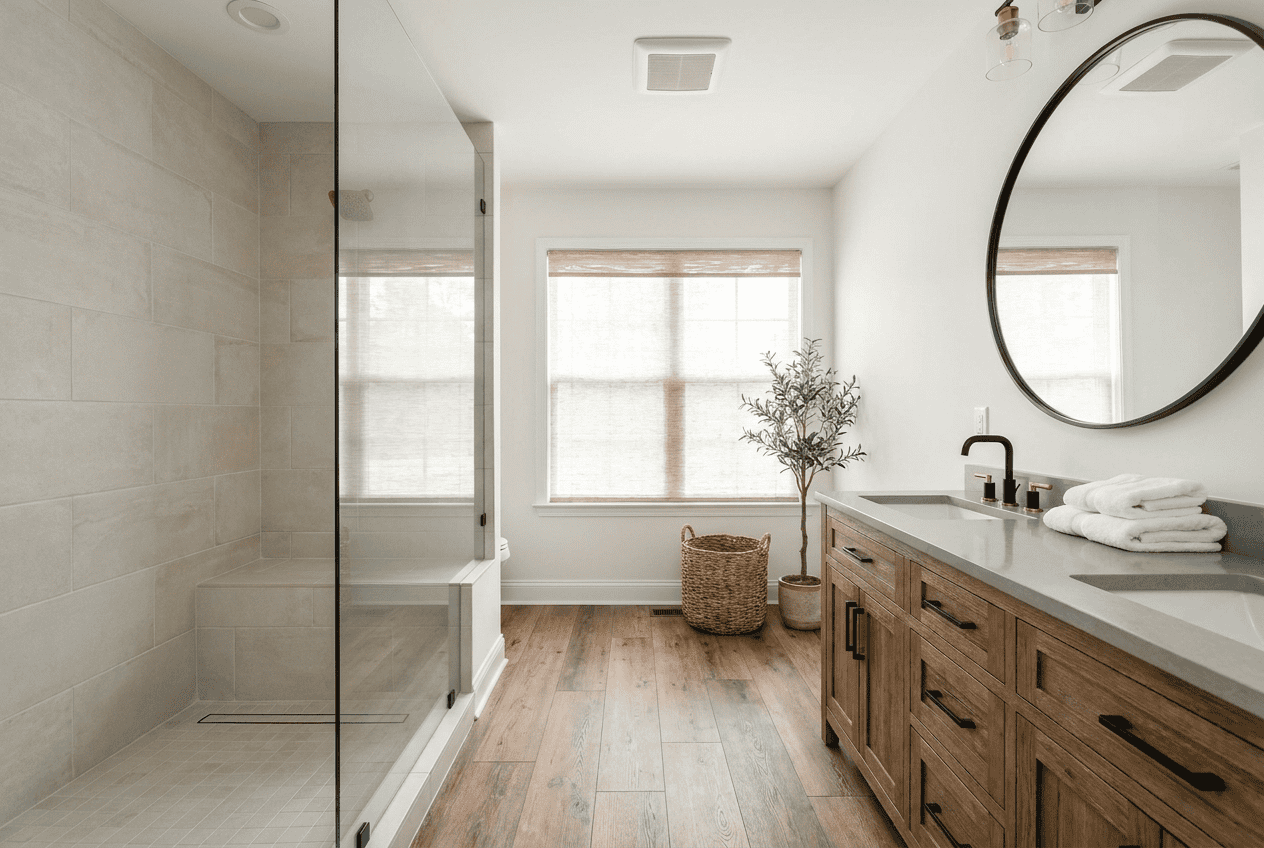
Homeowners comparing shower replacement materials should look beyond color samples and compare seam placement, cleaning requirements, wall preparation, repairability, and long-term durability. Polymer panels, tile, fiberglass, and stone composites solve different problems.
Polymer occupies the middle ground. It offers more style and rigidity than many basic fiberglass units, with less routine maintenance and wall-installation labor than tile.
Polymer Walls vs. Tile Showers
Tile wins on customization. It can handle complex layouts, unusual shapes, detailed patterns, and localized repair when matching pieces remain available.
Polymer wins on routine maintenance. It has fewer grout lines and fewer pieces to install. For homeowners who value low maintenance more than custom design, it is often the better practical choice.
Tile is not inherently leak-prone. A properly waterproofed tile shower can perform very well, but the waterproofing is hidden and installation quality varies.
Polymer Walls vs. Fiberglass and Stone Composites
Basic fiberglass wall panels are lightweight, relatively simple to install, and functional in secondary showers where utility matters more than a high end finish. Their thinner construction and more limited patterns can make them feel less substantial than better polymer systems.
Higher-quality polymer walls usually offer better patterns and a more substantial feel. Verify that difference with samples and completed work instead of assuming it from the category name.
Stone-based systems such as PuroStone wall systems may provide greater visual depth and rigidity than thinner acrylic products. Their weight, composition, installation requirements, and cost should be evaluated separately rather than treating every grout-free wall material as the same product.
When Is High-Tech Polymer a Good Choice?
High-tech polymer is a popular choice for busy households, replacement showers, secondary bathrooms, and aging-in-place projects where easier care matters more than custom tile work.
It is usually the wrong material for a bathroom built around complex mosaics, natural stone, historical detail, or unusual geometry.
Accessibility must be planned before installation. Grab bars need blocking, while seats, niches, handheld fixtures, and low-threshold acrylic shower pans affect cuts and seam placement. Although private residential bathrooms are not automatically required to follow commercial accessibility rules, the federal accessible shower standards demonstrate why reinforcement, grab-bar placement, clear space, controls, seats, and thresholds must be coordinated before the walls are finished.
Questions to Ask a Shower Contractor
Before approving a panel system, ask what the exact panel construction is, how damaged walls will be corrected, where seams will appear, and what supports accessories.
Also ask which cleaners are approved, how repairs are handled, whether a damaged panel can be replaced, and who provides the product and installation warranties.
A contractor who knows the system should answer directly. When the conversation stays focused on colors, patterns, and broad promises, keep looking.
Blue Mountain Bathrooms can help you compare wall systems, evaluate the condition of your existing shower, and determine whether high-tech polymer is a great choice for your bathroom, space, style, and long term plans.