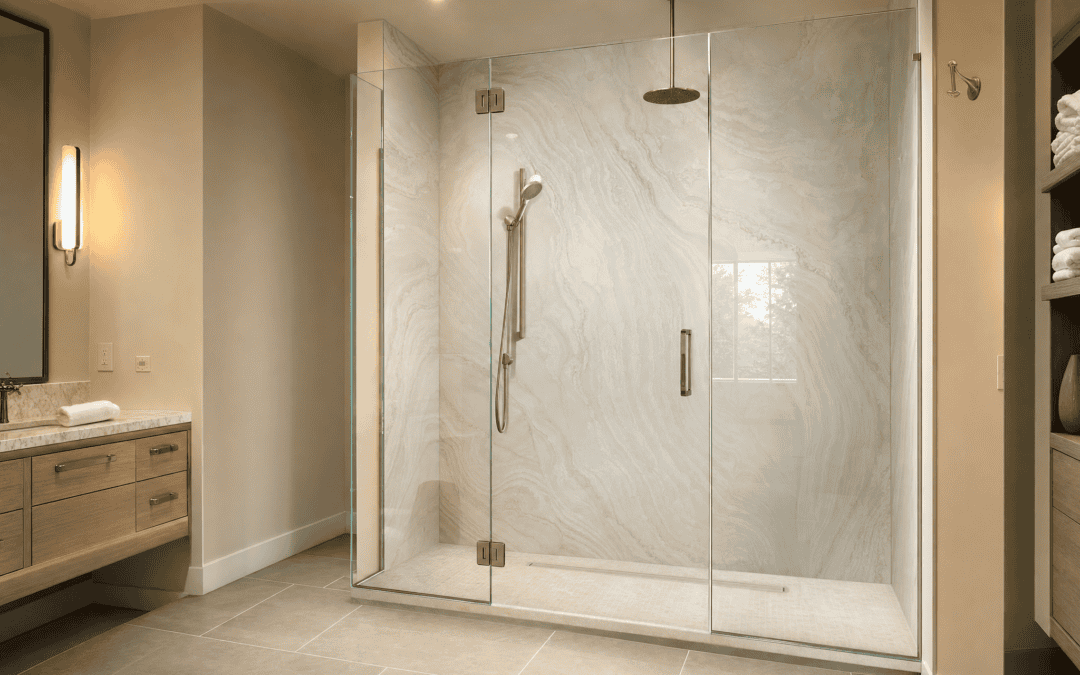
Onyx shower walls offer homeowners a grout-free alternative to traditional tile while providing more customization than many basic prefabricated surrounds. The material can work well in a primary bathroom, guest bath, or tub surround, but its value depends on how its appearance, upkeep, repairability, and cost fit the project.
Before choosing an Onyx shower, it helps to understand what the panels are actually made from and how they differ from other shower wall materials. No single shower material is the right decision for every home.
What Are Onyx Shower Walls?
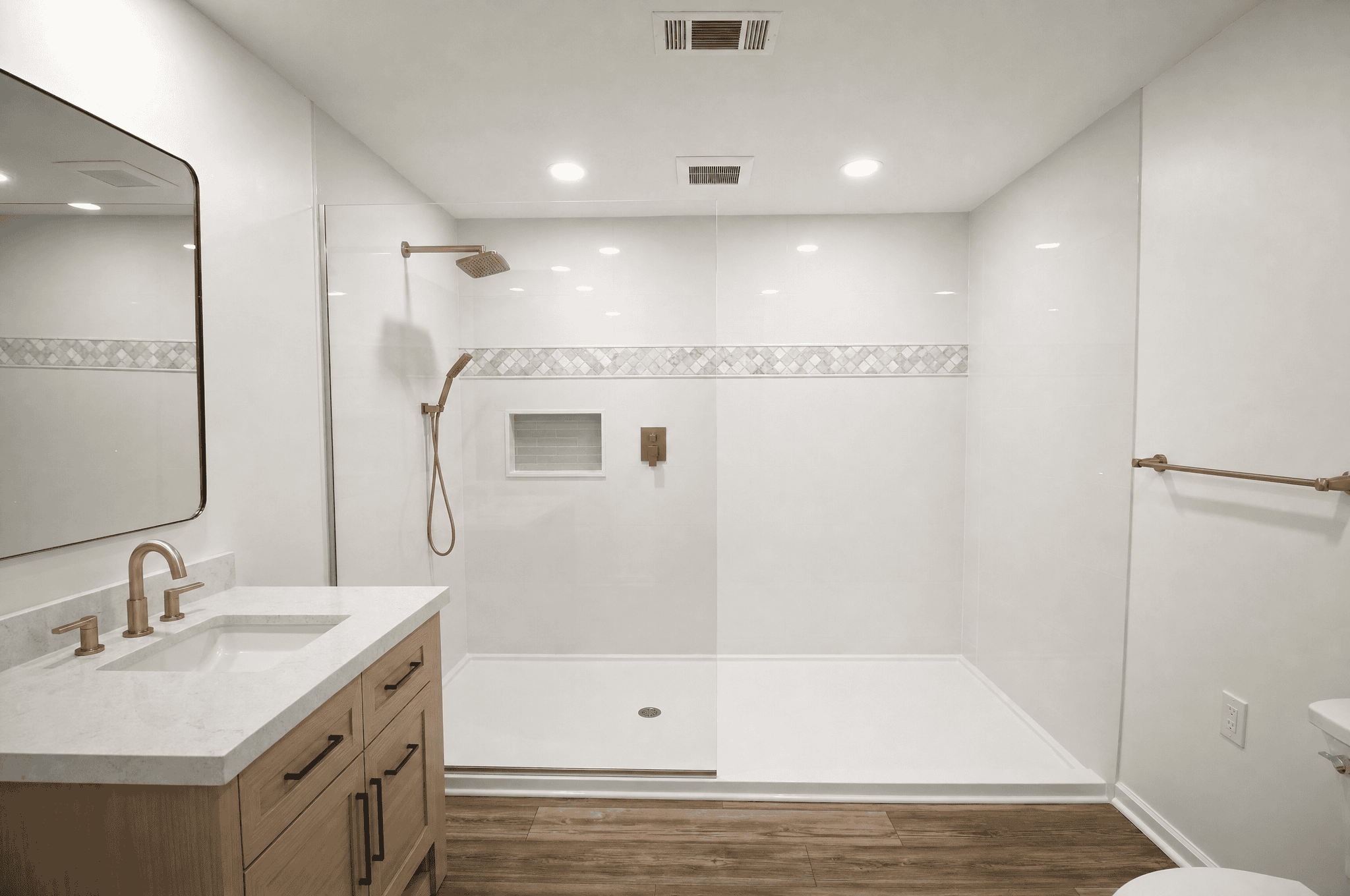
Despite the name, Onyx shower walls are not slabs of natural onyx stone. The Onyx Collection uses a stone-filled polymer composite made with mineral material and resin, finished with a protective gel coat. This creates a non-porous surface designed to resist water absorption and make routine cleaning easier.
An Onyx shower system can include wall panels, a shower base, trim, shelves, seats, and other accessories. Because Onyx panels are non-porous, the panel surface is resistant to mold and water damage, although mold can still develop on soap residue, silicone, or other damp areas if the shower is not maintained properly.
Why Homeowners Choose Onyx Shower Panels
Custom Sizing and Fewer Grout Lines
One of the biggest advantages of Onyx shower panels is customization. Panels can be ordered in multiple sizes and trimmed during installation to fit the shower dimensions. Using large panels can also reduce seams and eliminate the grout lines found throughout a traditional tile shower.
Fewer grout lines can mean less routine upkeep and fewer areas where soap residue collects. Panels are joined and sealed as part of the installation to create a watertight enclosure, making accurate sizing, wall preparation, and seam treatment important to long-term performance.
Color, Finish, and Bathroom Design
The Onyx Collection provides a wide variety of color and pattern choices, allowing homeowners to coordinate the shower with flooring, cabinets, fixtures, and the rest of the bathroom. Smooth gloss and textured designs can create anything from a simple contemporary space to a more decorative look.
While natural onyx stone is softer than granite and requires particularly gentle maintenance, Onyx shower panels are an engineered composite rather than slabs of natural onyx. Homeowners should base cleaning and care decisions on the requirements for the actual panel system being installed.
Onyx Shower Walls Pros and Cons
Pros of Onyx Panels
Onyx shower panels can be a strong fit when customization and lower-maintenance surfaces are priorities.
- Custom sizing can help accommodate an existing shower or tub space.
- Large panels eliminate most traditional grout lines.
- The non-porous surface resists water absorption and is less prone to mold growth on the panel itself.
- Coordinated bases, trim, shelves, and seats are available.
- Multiple color and finish options provide design flexibility.
- Professional installation can be faster than building a traditional tile surround.
These advantages can create a good balance for homeowners who want a customized appearance without the grout maintenance associated with tile.
Cons of Onyx Panels
Onyx is not damage-proof. Abrasive products can scratch the gel coat, and improper cutting, handling, or installation can lead to cracking or other damage. The surface therefore requires gentler care than some harder materials.
The gel coat also affects repairability. Minor surface issues may be repairable, but deeper scratches, chips, or cracks can be more difficult to restore invisibly. Cost, custom sizing, repair limits, and installer experience should all be part of the decision rather than appearance alone.
Cleaning and Maintaining an Onyx Shower
Onyx shower panels require relatively simple routine cleaning. Mild soap and warm water can handle everyday cleaning, while a soft cloth or non-abrasive sponge helps protect the finish. Abrasive powders, aggressive scrubbers, and harsh products should be avoided because they can scratch or dull the gel coat.
Because Onyx panels are non-porous and resistant to mold on the panel surface, there is no grout throughout the walls to scrub. However, seams, silicone, corners, and areas where bottles or mats trap moisture still require attention. Homeowners should also follow the manufacturer’s Onyx cleaning guidance for approved care methods and recommendations for hard-water buildup.
How Are Onyx Shower Panels Installed?
Onyx panels are custom-sized for the shower and then measured, trimmed, adhered, and sealed during installation. Existing shower materials may need to be removed first so the installer can check the wall condition and create a suitable surface for the new panels. Seams and transitions are then sealed to help create a watertight shower enclosure.
Installation of Onyx panels can often be completed in roughly one to two days once the space is properly prepared, although the overall shower replacement may take longer depending on demolition, wall repairs, plumbing changes, and accessories. Professional installation helps ensure the panels fit correctly, seams are properly sealed, and shower-head, shelf, seat, and other accessory locations are planned before the walls are installed.
How Does an Onyx Shower Compare With Other Panel Systems?
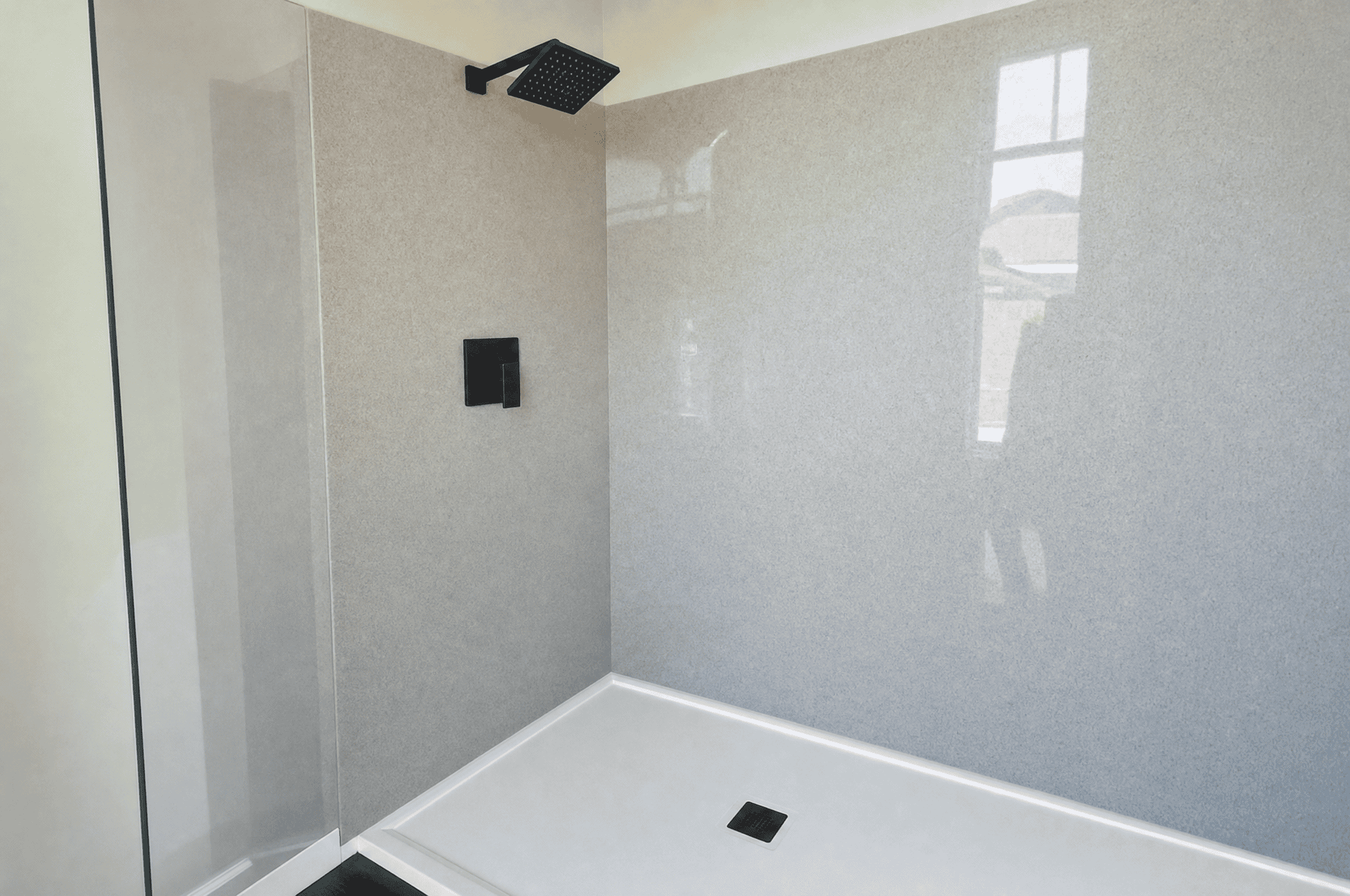
Onyx is one option within a larger group of grout-free shower materials. Homeowners considering proprietary systems may also want to compare the construction and maintenance of LuxStone shower walls or explore how Samuel Mueller panels differ in thickness, finish, sizing, and installation requirements.
The best comparison is not simply Onyx versus another brand. Check the actual panel construction, number of seams, repair options, cleaning requirements, available accessories, warranty, cost, installation method, and how well each system fits the available space.
Are Onyx Shower Walls a Good Fit for Your Bathroom?
Onyx shower walls can make sense for homeowners who want custom-sized panels, minimal grout, coordinated accessories, and a broad color selection. They can also reduce cleaning compared with a grout-heavy tile shower, but the gel coat still requires non-abrasive care and can be prone to scratching or more difficult repairs if substantial damage occurs.
When planning a shower replacement, compare those characteristics with your budget, design goals, cleaning habits, and expectations for long-term maintenance. The right choice is the material that creates the best balance between appearance, durability, upkeep, value, and everyday experience in your home.