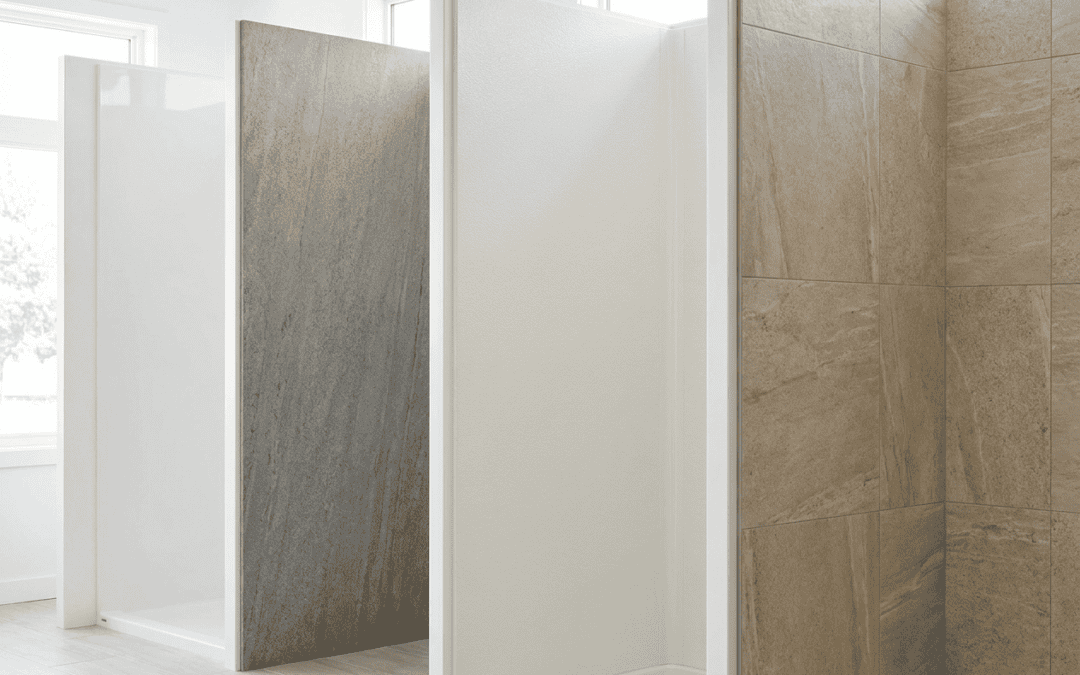
Choosing between shower replacement material options is not about picking the sample that looks best under showroom lights. The walls must handle daily water, cleaning products, movement at seams, and years of use without becoming a maintenance problem. For most replacement projects, quality grout-free wall panels are the practical winner because they have fewer joints than tile, clean faster, and can look substantial when the panel construction and installation are good.
Tile remains the better choice when design freedom matters more than maintenance. Fiberglass still has a place in basic, budget-friendly work, while acrylic, polymer, solid surface, and stone-composite systems fill the large middle ground. Those labels alone do not tell a homeowner enough, though. The visible shower walls are only one part of the assembly, and premium materials installed over damaged walls or poorly connected to the shower base still produce a bad shower.
How to Compare Shower Replacement Material Options
Start with maintenance, construction, repairability, and fit. Compare shower wall materials as complete systems rather than isolated samples. Color should come later.
Maintenance Requirements and Everyday Cleaning
Large wall panels usually require less work than tile because there are fewer joints where soap residue can collect. A non porous acrylic or solid surface panel can often be cleaned with a soft cloth and an approved cleaner. Tile shower walls add grout lines, corners, and textured surfaces that demand more attention.
Low maintenance does not mean maintenance-free. Silicone joints still need inspection, and hard water still leaves marks. High gloss surfaces wipe smoothly but show dried drops and water splashes, while matte finishes hide spotting better. Deep texture, however, can slow easy cleaning. Choose the finish based on the work you will actually do, not the cleaning promise printed in a brochure.
Water Resistance, Seams, and Moisture Control
A water resistant finish is not the same as a waterproof shower. Water reaches corners, panel joints, plumbing openings, and the transition between the shower walls and shower pan. Those details usually fail before the middle of a panel does.
Fewer seams are generally better because they reduce places for soap, moisture, and mold growth to collect. Still, one careless seam can cause more trouble than many properly built grout joints. Ask how the entire shower handles heat and water splashes and moves water toward the drain. “The panels are waterproof” is not a complete answer.
Durability, Finish Wear, and Repairability
Every shower material can be damaged, so the useful question is what happens next. Thin fiberglass can flex, crack, or lose its finish. Acrylic can scratch when abrasive pads or harsh chemicals are used. Tile can chip, grout can crack, and natural stone can etch or stain.
A highly durable, color-through solid surface may allow minor scratches to be renewed. Printed or coated shower panels can be harder to repair without leaving a visible patch. Ask whether a damaged panel can be repaired on site, whether replacement pieces remain available, and whether the visible finish runs through the material or only sits on its face.
Sizing, Accessories, and Accessibility
A standard sized shower can often accept a prefabricated shower surround. Odd dimensions, sloped ceilings, large niches, and custom benches narrow the options. Tile offers the most design versatility around unusual conditions, while measured shower wall panels can also fit custom spaces when the installer understands that specific system.
Plan grab bars, seats, shelves, the shower head, and glass shower doors before the walls go in because these items need secure blocking or an approved mounting method. Even when grab bars are not being installed immediately, planning future grab-bar reinforcement while the bathroom walls are open makes later installation safer and far less disruptive.
Fiberglass Shower Walls: A Basic Option
Fiberglass is not the best material for most homeowners planning a substantial bathroom upgrade. It is the entry-level option and should be judged that way.
Where Fiberglass Performs Well
Fiberglass shower walls make sense in a straightforward alcove that matches a standard kit. They are lightweight, cost effective, and common in secondary bathrooms and basic new construction. A one-piece shower surround limits seams, but getting a full unit into an existing room is often impractical, so replacement work usually relies on multipart wall panels.
Fiberglass also works for tub walls where speed and function matter more than a custom appearance.
Common Fiberglass Drawbacks
Fiberglass tends to show its material tier over time. The surface can dull, scratch, flex, or yellow. Deep molded texture may hold residue, and cracks are difficult to repair invisibly.
Movement is the larger concern. A wall or shower base that flexes under normal use puts stress on drains, joints, and sealant. Fiberglass can be a practical choice for a budget friendly project, but it is usually the wrong material when the homeowner expects an upscale finish.
When Fiberglass Is the Right Fit
Use fiberglass when the room accepts a standard kit and the goal is a functional, basic new shower. Move up to acrylic or another material when rigidity, custom sizing, and long-term appearance matter. This closer review of fiberglass wall panels explains where the material performs adequately and where its flexibility, finish, and limited customization become drawbacks.
DIY installation is sometimes marketed as an advantage, but installing wall panels still requires straight walls, correct adhesive, firm support, and sealed joints. Fiberglass only remains cost effective when it is installed properly.
Acrylic Shower Wall Panels and High-Tech Polymer
Acrylic is usually a meaningful step above fiberglass. It looks cleaner, feels more substantial, and offers more finish choices.
How Acrylic Wall Panels Are Built
Acrylic shower wall panels may be molded as full units, supplied as separate acrylic panels, or bonded to backing materials. Some acrylic wall panels imitate tile or marble, while others use a simple high gloss finish. Decorative wall panels can add visual appeal without real grout joints.
Ask the contractor to identify the full construction. “It is acrylic” is not enough.
Acrylic Versus Fiberglass
Acrylic shower walls usually have a more consistent finish than fiberglass shower walls. Quality acrylic is also less likely to look chalky or thin. Fiberglass remains the cheaper material, but acrylic is usually the better value in a primary bathroom that is used every day.
Neither material is immune to damage. Acrylic panels can scratch, while fiberglass may flex and age faster. For most primary bathrooms, acrylic wins this comparison.
Acrylic Versus High-Tech Polymer
High-tech polymer is not one standardized shower wall material. It may describe a proprietary blend, reinforced core, layered panel, or branded surface. Ask what the core contains, whether the pattern is printed or color-through, whether the panel is non porous, and how corners are finished.
A stronger polymer system may provide better rigidity or impact resistance than ordinary acrylic shower panels, but it may also require a specific installation method. Before treating every polymer panel as equivalent, compare how different high-tech polymer systems are constructed, finished, supported, installed, and repaired.
Solid-Surface and Stone-Composite Shower Walls
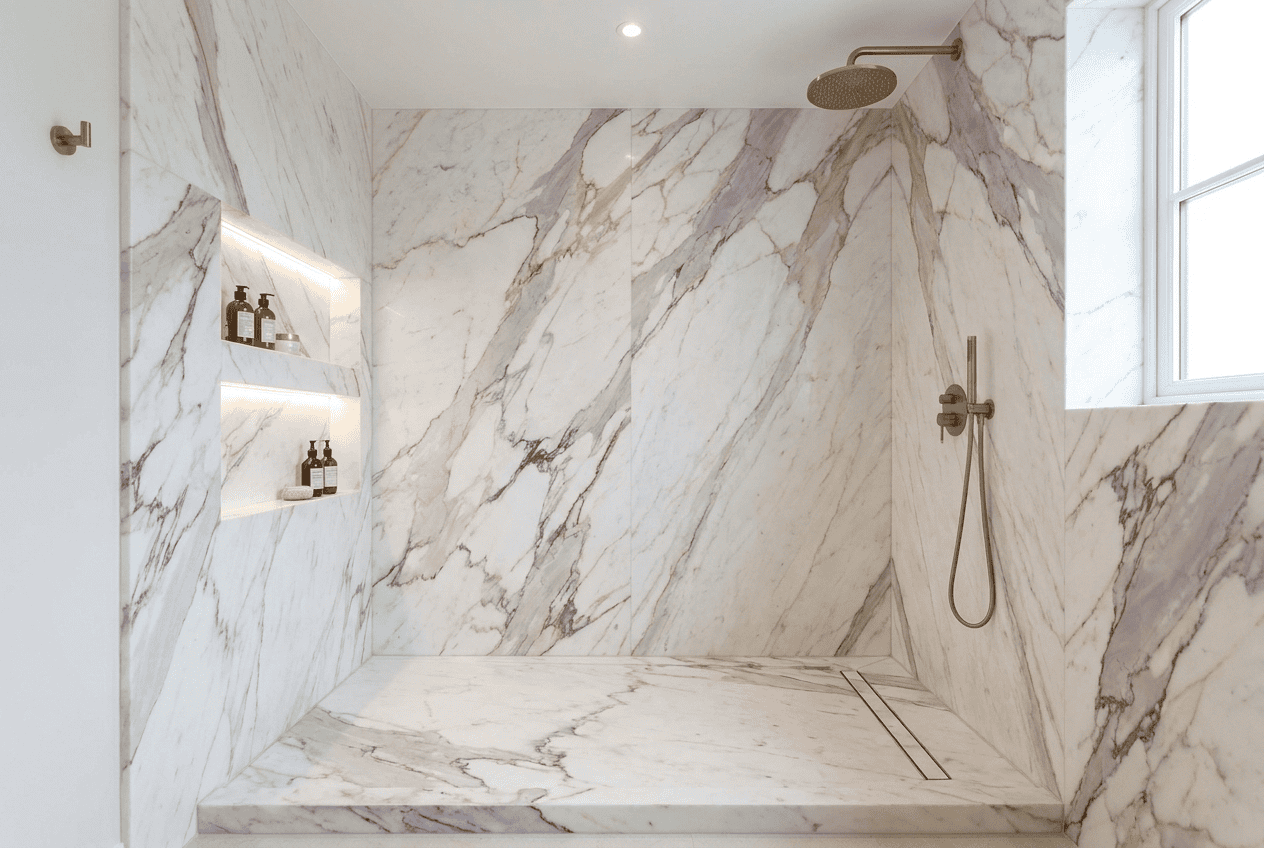
This category needs more scrutiny than it usually gets. Solid surface, stone resin, cultured marble, mineral-filled products, laminate panels, and proprietary wall systems are not interchangeable. Some are thick and color-through, some are layered, and others use a decorative face over a different core.
What Solid Surface and Stone Composite Mean
Traditional solid surface is a non porous manufactured material that can be fabricated into shower walls, shower bases, and accessories. Stone-composite materials may use mineral fillers, resin, crushed stone, or layered construction. Cultured marble is manufactured but commonly relies on a finished surface over a cast body, while natural stone is quarried and behaves differently.
A contractor should be able to explain what supports the panel, how thick it is, and how corners are handled. “Premium stone” is marketing, not a specification.
PuroStone Shower Walls
PuroStone should be evaluated by its current construction, not by its stone-inspired name. Ask about thickness, finish, trim, approved cleaners, custom sizing, and repair options. Also ask whether the pattern runs through the material or sits on the face.
A detailed review of PuroStone construction can help homeowners compare its panel makeup, finish, installation details, and repair limitations after the final product and destination slug are confirmed.
Swanstone Shower Walls
Swanstone belongs in the solid-surface conversation rather than the same category as thin acrylic wall panels. Current manufacturer documentation for selected Swanstone panels describes reinforced solid surface with color and texture running through the product. Exact dimensions, textures, installation requirements, and cleaning guidance still vary by model.
The practical advantage is a substantial, grout-free surface that can be trimmed for many applications. The contractor still needs to plan seams, substrate condition, accessories, and the shower base connection. The product-specific discussion of Swanstone solid surface examines why panel thickness, color-through construction, available textures, and installer familiarity matter more than the brand name alone.
LuxStone Shower Walls
LuxStone is a proprietary wall system, so it should be compared as a complete installed system rather than as a loose material label. Review the selected pattern at full scale, not only on a sample chip, and examine corner treatment, accessory placement, seam visibility, cleaning instructions, and warranty handling.
A closer look at the LuxStone wall system can help homeowners evaluate the full installation, including panel patterns, seams, accessories, cleaning guidance, and warranty support, after the final slug is approved.
Onyx Shower Walls
Onyx wall systems sit on the cultured or engineered side of the market, but the selected product specifications should control the comparison. Look at custom sizing, edge treatment, sheen, pattern consistency, seam visibility, and approved non abrasive cleaners.
Onyx can provide an elegant look and a stain resistant, grout-free surface when the selected product documentation supports those claims. It should not be confused with natural stone simply because a pattern resembles marble. The complete review of Onyx wall systems explains how custom sizing, sheen, edge details, pattern consistency, cleaning requirements, and repair options affect the finished shower.
Samuel Mueller Shower Walls
Samuel Mueller sells more than one wall construction, which is why the collection name and model matter. Current product pages include solid-surface panels with different thicknesses, finishes, dimensions, and warranty terms. Homeowners should compare the exact collection rather than asking only whether the contractor carries the brand.
Ask about panel thickness, multiple sizes, finish, trimming, seam treatment, cleaning requirements, and warranty coverage. A product-level comparison of Samuel Mueller panels can help distinguish the available collections by construction, dimensions, finish, installation requirements, and warranty terms once the final URL is confirmed.
Questions for Any Proprietary System
Bring these questions to the estimate:
- What is the panel made from, and is the finish color-through or surface-applied?
- How are seams, corners, niches, and plumbing openings handled?
- Can chips or scratches be repaired?
- What substrate, adhesive, and trim does the system require?
- Can grab bars and door hardware be mounted securely?
- Which cleaners are approved, and who handles warranty claims?
A confident installer should answer without hiding behind product language.
Tile, Glass Tiles, and Natural Stone
Tile still offers the greatest design freedom. It also creates the most maintenance and the most opportunities for installation errors. Choose it because the design requires tile, not because tile is the traditional default.
Ceramic Tile and Porcelain
Ceramic tile works on shower walls when the product is suited to the application and the assembly behind it is correct. Porcelain is generally denser, although the exact tile still matters. Both can handle custom patterns, borders, niches, curves, and unusual dimensions. Classic subway tile suits traditional rooms, while large format tiles reduce grout lines.
A tile shower is time consuming because the installer must prepare and waterproof the walls, plan the layout, make clean cuts, set each piece, grout the joints, and finish transitions. The tile is the finish. It is not the waterproofing.
Glass Tiles and Decorative Accents
Glass tiles work best as controlled accents. A niche back or narrow band can add visual appeal, but an entire shower of small glass pieces creates more grout, water spotting, and installation risk than most rooms need.
Natural Stone, Marble, and Cultured Marble
Natural stone and marble provide depth and variation that printed panels cannot fully copy, but they also require more care. Some stone needs sealing, and marble can etch when exposed to acidic products.
Cultured marble is manufactured and should not be treated as quarried marble. It may provide a smoother shower surround, but care requirements depend on its construction. Natural stone is for homeowners who accept the maintenance because they truly want the material. It is not the sensible default for easy cleaning.
Grout, Backer Board, and Waterproofing
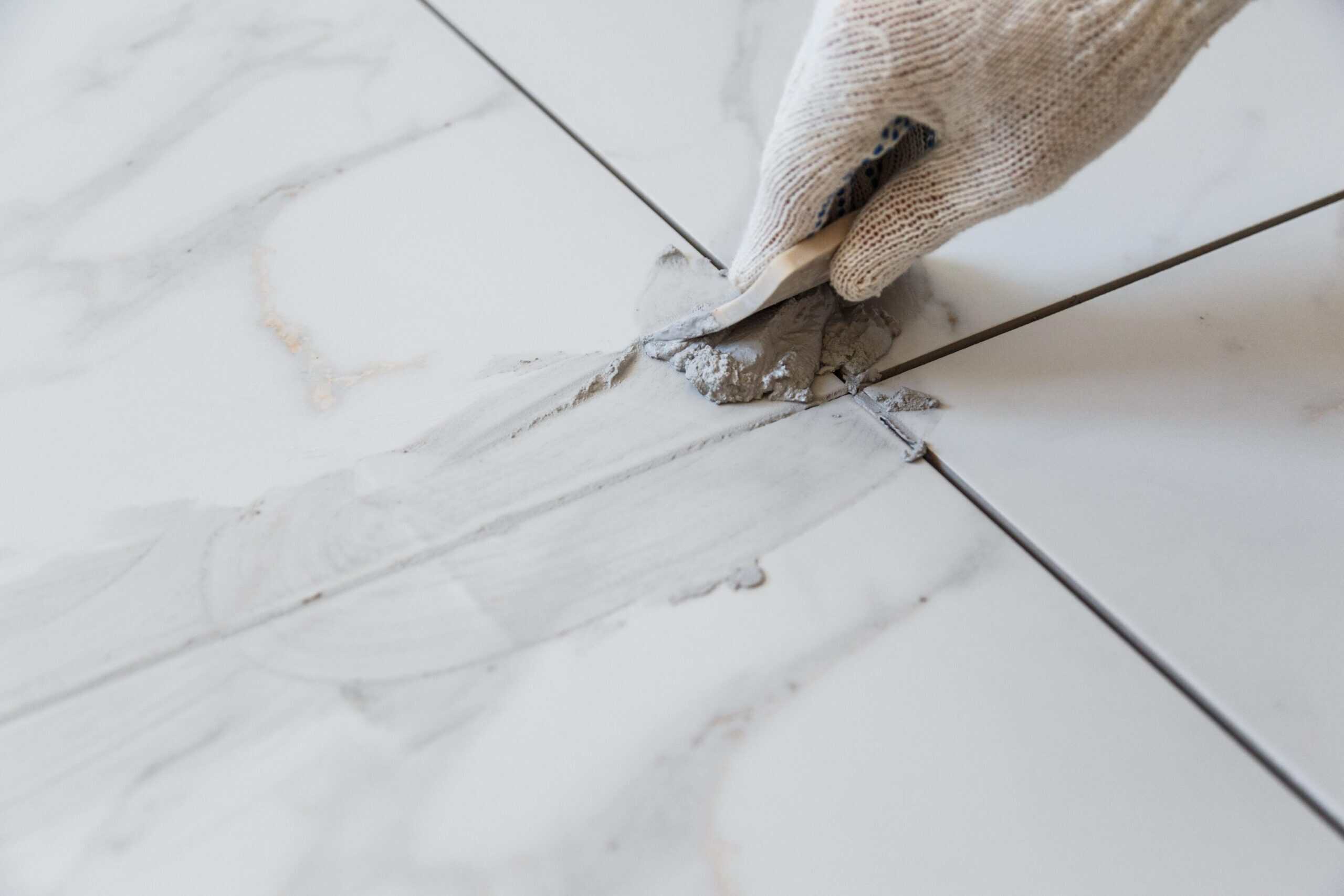
Grout is not waterproof, and ordinary backer board is not waterproof by itself. A reliable tile shower needs a defined waterproofing method behind or directly below the tile. Corners, fasteners, benches, niches, plumbing openings, and the shower pan connection all require attention.
Cracked grout may indicate movement. Repeatedly covering a failed corner with more caulk does not correct the cause. A beautiful tile shower with weak waterproofing is a delayed repair project.
When Tile Is the Right Choice
Choose tile when the design cannot be achieved convincingly with wall panels. That includes unusual geometry, handcrafted tile, detailed patterns, and projects combining ceramic tile, glass tiles, subway tile, or natural stone.
Do not choose tile when the priority is the easiest possible cleaning. Quality solid surface and large shower wall panels have a clear advantage there. Tile earns its place through customization, not convenience.
Which Shower Wall Material Is Easiest to Clean?
Large grout-free shower panels are usually the easiest shower walls to maintain. Acrylic, polymer, and solid surface beat small-format tile for routine care because there are fewer joints to scrub.
Cleaning Without Damaging the Finish
Aggressive cleaning can ruin a shower faster than ordinary use. A rough scrubber may dull acrylic wall panels, strong solvents can damage sealants or finishes, and products intended for ceramic tile may be wrong for another material.
Use a soft cloth or non-scratch sponge with manufacturer-approved cleaners. Once abrasion changes the sheen, normal cleaning will not restore it.
Preventing Mold Growth
Mold can grow on soap residue, body oils, caulk, grout, and damp debris even when the wall itself is non porous. Ventilate the bathroom, let the shower dry, and clean corners before mold buildup becomes established.
Failed caulk should be removed and replaced. Persistent discoloration can indicate trapped moisture or an opened joint. No shower material makes poor ventilation harmless. The EPA’s bathroom moisture guidance recommends increasing ventilation and cleaning frequency when bathroom mold repeatedly returns.
Installation Matters More Than the Sample
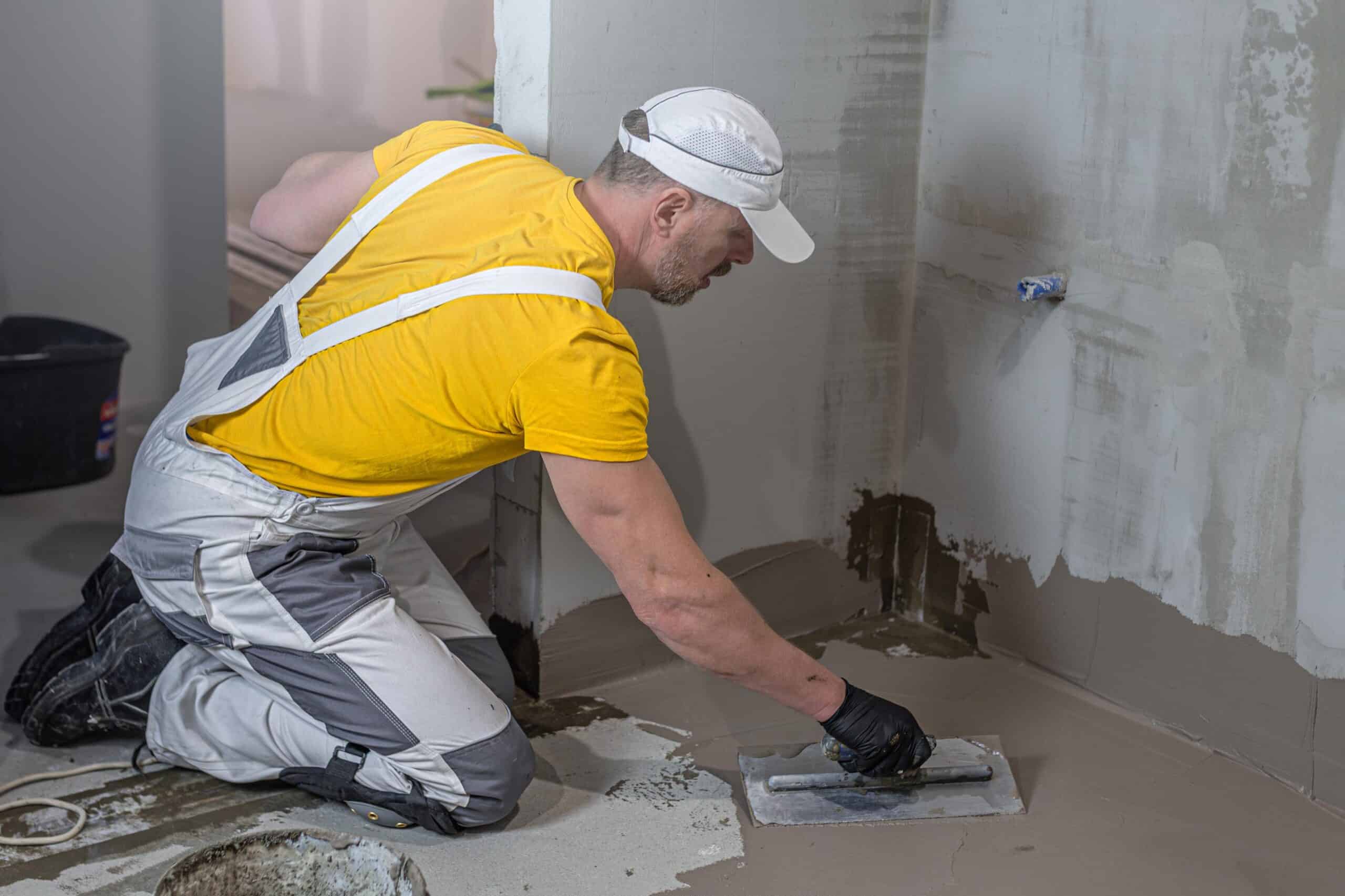
A contractor removes the old surround and finds damaged framing below the valve wall. Covering it with expensive materials does not solve the problem. The visible wall gets the attention, but the substrate, seams, plumbing penetrations, and shower base determine whether the project holds up.
Shower Pan and Shower Base Integration
The shower walls must connect correctly to the shower pan. That connection may use a flange, overlap, trim, or manufacturer-specific sealant detail. Water should drain into the base without relying on one decorative caulk bead as the only defense.
Mixing products from unrelated systems can work only when the installer has a clear method for connecting them.
Substrate and Wall Preparation
Removing an old shower may reveal soft drywall, damaged studs, mold growth, bowed walls, or failed repairs. Those conditions need correction before installing wall panels. A measured panel cannot hide a badly uneven wall without creating stress or ugly seams.
For tile, backer board provides a suitable surface but may still need a separate waterproof membrane. Moisture resistant does not mean waterproof. Covering damage to preserve the schedule is unacceptable.
Can Wall Panels Go Over Existing Tile?
Sometimes, but it should not be the automatic plan. Existing tile must be firmly bonded, dry, flat enough for the panel system, and compatible with the required adhesive. Added thickness must also work with plumbing trim and doors.
Installing wall panels over tile can reduce demolition, but it can conceal moisture damage and make the shower smaller. Loose tile, movement cracks, or signs of water intrusion should be investigated rather than covered.
Choosing the Right Shower Wall Material
There is no universal winner, but there are clear winners for specific priorities.
Best for Low Maintenance
Choose a quality non porous panel system with few seams. Solid surface, stone composite, reinforced polymer, and quality acrylic generally outperform small tile when the homeowner wants minimal grout and straightforward care.
Best Budget-Friendly Choice
Fiberglass is the entry-level budget friendly material. Acrylic is often the better long-term balance in a primary bathroom because it improves rigidity and appearance without requiring tile maintenance. Do not choose fiberglass and expect it to look like solid surface.
Best for Design Versatility
Tile wins when the room requires intricate patterns, unusual geometry, or detailed custom work. Measured solid-surface and composite wall panels are better when the homeowner wants a custom fit without extensive grout lines.
Pattern selection is not the same as material quality, and one other material may fit the room better.
What to Bring to the Consultation
Know the look you want, the cleaning you will realistically do, the approximate dimensions, and any plans for niches, seats, grab bars, or glass. Also decide whether you prefer matte finishes or high gloss and which relative material tier fits the next project.
Blue Mountain Bathrooms helps homeowners compare shower materials based on the room, daily use, cleaning preferences, and long-term performance. Instead of forcing every project into the same wall system, the team recommends an option that makes sense for the shower’s structure, appearance, and maintenance needs.
Ready to plan your new shower? Explore Blue Mountain Bathrooms’ and schedule a consultation.